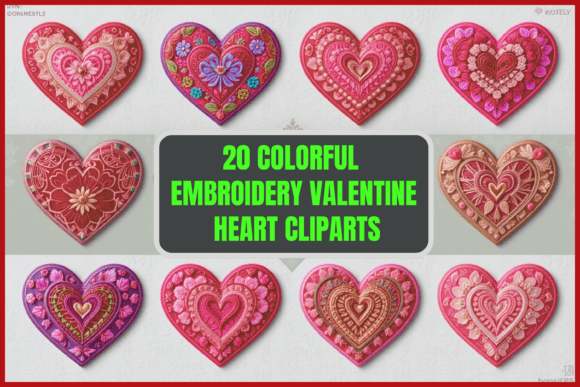
Reviewing 20 Embroidery Valentine Hearts Cliparts
As an embroidery designer who has spent years digitizing patterns and testing them on everything from delicate silk to heavy denim, I approach every new digital embroidery file with a mix of excitement and skepticism. When I first opened the folder for the 20 Embroidery Valentine Hearts Cliparts, my immediate goal was to determine if these assets could translate into high-quality, sellable products for my personalized gift shop. The description promised a blend of traditional warmth and digital versatility, but does it hold up under the needle?
The first impression is undeniably charming. These are not just static images; they are designed with the texture and depth of hand-stitched work in mind. For those of us creating Illustrations and Graphics for crafters, the mood here is sweet, romantic, and distinctly handmade. It avoids the sterile look of vector art by mimicking the slight irregularities and thread overlaps found in real machine embroidery design work. This emotional appeal is crucial because customers buying a personalized gift are often looking for that human touch, even if the initial design started as a digital file.
Versatility Across Product Lines
The true test of any design asset is its adaptability. I evaluated how these twenty heart variations would perform across different product categories. For baby embroidery, the softer, rounded heart shapes are perfect. They feel safe and nurturing, making them ideal for nursery decor or custom onesies. However, when considering wedding gift applications, I looked for the more elegant, intricate designs within the set. These could be beautifully scaled down for monogram accents on handkerchiefs or scaled up for a statement piece on a tote bag.
For Etsy seller communities and small shop owners, variety is key. Having twenty distinct options means you can offer customization without needing to purchase multiple separate licenses. I envisioned using the bolder hearts for embroidered towel hems, where the design needs to stand out against terry cloth. Conversely, the finer line-work hearts would shine on a smooth cotton pillow cover or a lightweight apron. The ability to mix and match these cliparts allows for unique compositions, such as a border of varying heart sizes on a blanket embroidery project, adding visual interest without overwhelming the fabric.
Technical Considerations for Real-World Stitching
While the aesthetic is strong, practical application requires caution. As a designer, I must warn against blindly trusting digital previews. Before committing to a customer order, you must check the specific technical details of your chosen embroidery file. Since the product description mentions PNG and SVG formats, it is vital to understand how these convert to machine-readable formats. If you are using these as references for manual digitizing or printing for heat transfer, the resolution matters immensely.
One critical area to watch is stitch density. If you are converting these graphics into actual machine stitches, ensure the density is appropriate for your fabric. High-density stitching on stretchy baby clothes can cause puckering, while low density on thick towels might look sparse and unprofessional. Always test on scrap fabric first. I recommend running tests on both light and dark fabrics to check thread colors contrast. A pastel pink heart might disappear on a cream background but pop beautifully on navy blue.
Another factor is the hoop size. Some of the larger, more detailed hearts in this collection may require a 5x7 or even 6x10 hoop to capture all the nuances. If you are working with a smaller 4x4 hoop, you may need to crop or simplify the design. Additionally, always use the proper stabilizer. For textured fabrics like waffle weave or linen, a cut-away stabilizer is often necessary to prevent distortion, especially if the design has wide areas of fill stitch.
Navigating Fabric and Surface Challenges
Not every surface is friendly to embroidery. When using these hearts on curved surfaces, such as the toe of a sock or the cap of a hat, placement is tricky. The design might distort if not hooped correctly. Similarly, dark fabric presents a challenge for visibility during the stitching process. I advise using water-soluble stabilizers with printed guidelines to ensure precise placement of each heart. This is particularly important for custom embroidery orders where alignment must be perfect to maintain a professional look.
Be cautious with very small lettering or intricate details if you plan to combine these hearts with text. The hearts themselves are the focal point; adding too much small text nearby can clutter the design and make it difficult to read after washing. For products that need frequent washing, such as kitchen towels or baby bibs, ensure that the stitch type used (if digitizing from these cliparts) is secure. Satin stitches should be kept narrow to prevent snagging, and fill stitches should have adequate underlay to anchor them to the fabric.
Enhancing Perceived Value and Customer Trust
From a business perspective, the quality of your design directly impacts perceived value. A well-executed heart design suggests care and attention to detail, which builds customer trust. When shoppers see a handmade product that looks polished and professional, they are more likely to engage with your brand and leave positive reviews. These cliparts can also enhance your product photography. Using them to create realistic printable mockup images for your online store can help buyers visualize the final result, increasing conversion rates.
For commercial embroidery use, always confirm the licensing terms. While these are marketed as cliparts, using them to create finished goods for sale usually requires a commercial license. Ensure you have the right to sell the finished product derived from these designs. This legal clarity protects your small business and ensures you can scale your operations without worry.
In conclusion, the 20 Embroidery Valentine Hearts Cliparts offer a versatile and emotionally resonant toolkit for designers. Whether you are creating a sentimental wedding gift, a cozy baby item, or a stylish home accessory, these designs provide a solid foundation. By paying attention to fabric texture, stabilizer choice, and technical constraints, you can transform these digital assets into cherished physical keepsakes. Remember to test thoroughly, respect the limitations of your machinery, and let the inherent charm of the hearts shine through in every stitch.