Greek Floral Border Meander: A Designer’s Review
As an embroidery designer who has spent years digitizing files for small business merchandise, I approach every new machine embroidery design with a critical eye. It is not just about whether a pattern looks pretty on a screen; it is about how it performs in the real world of branded patches, custom apparel, and boutique products. Recently, I reviewed the Greek Floral Border Meander, and I want to share my professional assessment of how this piece fits into a commercial workflow.
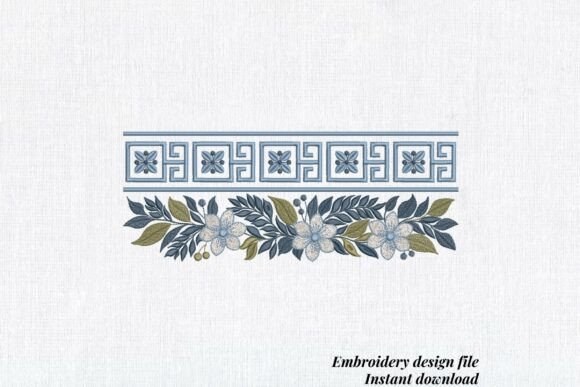
This design features a refined border set combining a classic Greek meander line with a soft blue floral botanical border. The balanced ornamental composition works beautifully on table runners, but its potential extends far beyond home decor. For small business owners, Etsy sellers, and apparel decorators, understanding the nuance of this embroidery file is key to leveraging it for brand growth.
First Impressions: Balancing Classic Structure with Softness
The immediate visual impact of the Greek Floral Border Meander is one of sophisticated balance. The Greek meander, often called the Greek key, is a symbol of infinity and unity. It is rigid, geometric, and historically significant. By pairing it with a soft blue floral botanical border, the design achieves a rare duality: it feels both structured and organic.
For a handmade brand or creative studio, this aesthetic signals professionalism without feeling cold or corporate. It is elegant yet approachable. When I look at this design, I do not see a generic clip-art style pattern. I see a thoughtful composition that can elevate a finished product from simple merchandise to a collectible item. The "soft blue" description suggests a calming palette, which is ideal for wellness brands, florists, bakeries, or boutique cafes aiming for a serene customer experience.
Real-World Applications for Small Business Merch
While the product description highlights table runners, my focus is on how this design serves as a versatile asset for small business merch. Here is where I see the highest return on investment for this specific Borders category design:
- Apron Embroidery: For bakeries and florists, placing this border along the bottom hem or pocket of a staff apron adds a touch of artisanal quality. It reinforces the idea that the business values detail and craftsmanship.
- Tote Bag Design: A tote bag is a walking billboard. Using the meander line as a frame for a business logo or website URL creates a high-end look. The floral elements soften the geometry, making it appealing for lifestyle brands.
- Custom Apparel Accents: Instead of a large chest logo, consider using a segment of this border on the sleeve cuff or collar of a work shirt. This subtle use of custom apparel detailing speaks volumes about brand identity.
- Embroidered Patches: This design translates well to patches. A rectangular patch featuring the meander and floral motif can be sewn onto denim jackets, canvas bags, or uniform hats, creating a cohesive team look for local businesses.
Technical Considerations for Production
Before running this digital embroidery file on your machine, there are several technical factors to evaluate. As a designer, I always advise testing the limits of a pattern before committing to a large production run.
Stitch Density and Fabric Texture: The combination of geometric lines and floral details requires careful attention to stitch density. If the density is too high on a lightweight fabric, you risk puckering. Conversely, if it is too low on a heavy canvas, the fabric may show through. Always test on the actual material you plan to use. For textured fabrics like linen or heavy cotton twill, ensure the underlay stitches are sufficient to anchor the design.
Thread Colors and Contrast: The description mentions "soft blue," but in a commercial setting, you may need to adapt the thread colors to match specific brand guidelines. Test the design in black and white first. If the floral details disappear against the meander line in monochrome, you may need to adjust the contrast or simplify the color palette for smaller applications.
Hoop Size and Placement: Since this is a border design, confirm the required hoop size before starting. If you are embroidering on curved surfaces like caps, you must ensure the design fits within the cap frame without distortion. The geometric nature of the meander means any stretching will be visibly obvious, so proper stabilizer selection is non-negotiable. Use a cut-away stabilizer for garments that will undergo frequent washing to maintain shape integrity.
Strategic Branding and Customer Trust
Why does this matter for your bottom line? Because consistent, high-quality visuals build trust. When a customer receives a product with crisp, well-executed embroidery, they perceive higher value. The Greek Floral Border Meander contributes to brand identity by offering a recognizable visual signature.
For Etsy sellers and crafters, using such distinctive design assets helps differentiate your shop from competitors using generic fonts or clip art. It shows that you have invested in unique, professional-grade resources. This attention to detail enhances buyer engagement and can justify a higher price point for your handmade product offerings.
Where to Use Caution
While versatile, this design is not suitable for every application. Avoid using it on very small patches where the intricate floral details might merge into a blob due to thread thickness. Similarly, be cautious with tiny lettering integrated into the meander line; if the text is too small, it may not stitch out cleanly.
Also, consider the end-use environment. For items that require industrial laundering, such as hospital uniforms or heavy-duty workwear, ensure the thread type is durable enough to withstand harsh chemicals and high heat. Always check the specific license terms of the embroidery file to confirm it allows for commercial embroidery and mass production if you plan to sell hundreds of units.
Final Designer Notes
To get the most out of the Greek Floral Border Meander, follow these practical steps:
- Create a printable mockup to visualize the design on your specific product before stitching.
- Compare it beside other design assets in your library to ensure visual consistency across your product line.
- Test on scrap fabric identical to your final product to check for puckering or thread breaks.
- Verify the file format compatibility with your specific embroidery machine software.
In conclusion, this design is a strong contender for businesses looking to add a touch of classical elegance to their merchandise. It bridges the gap between traditional craftsmanship and modern branding needs. By respecting the technical requirements and applying it strategically, you can turn this beautiful border into a powerful tool for your business.